
INTRODUCTION
Zerodha is one of India’s most successful fintech startups. Without heavy advertising, without venture capital funding, and without hype marketing, it became India’s largest retail stockbroker.
In this detailed Zerodha case study, we will explore:
• Who founded Zerodha
• How Zerodha was built
• The business model
• Growth strategy
• Challenges faced
• Key lessons for startup founders
If you have a startup mindset, this story will inspire you.
------------------------------------------------------------
WHO FOUNDED ZERODHA?
Zerodha was founded in 2010 by two brothers:
• Nithin Kamath
• Nikhil Kamath
Both are from Bangalore, India.
Nithin Kamath started trading at a young age. He experienced firsthand how high brokerage charges reduced profits for retail traders. This frustration led to the birth of Zerodha.
The idea was simple:
“Make trading affordable and accessible for everyone.”
------------------------------------------------------------
MEANING OF THE NAME ZERODHA
The name Zerodha is derived from:
“Zero” + “Rodha” (a Sanskrit word meaning barrier).
The meaning: Zero Barriers.
This reflected their mission:
• Zero high brokerage
• Zero hidden charges
• Zero entry barriers for retail investors
The brand name itself explained the vision.
------------------------------------------------------------
THE PROBLEM IN THE MARKET (2010 ERA)
Before Zerodha entered the market, brokerage firms like:
• ICICI Direct
• HDFC Securities
• Sharekhan
dominated the industry.
Common issues were:
• Percentage-based high brokerage
• Complex pricing structures
• Hidden fees
• Outdated trading platforms
• Heavy paperwork
Retail traders struggled to make profits because brokerage fees were eating their returns.
Zerodha identified this gap.
------------------------------------------------------------
ZERODHA’S BUSINESS MODEL (THE DISRUPTION)
Zerodha introduced the Discount Brokerage Model.
Instead of charging percentage-based brokerage, they charged:
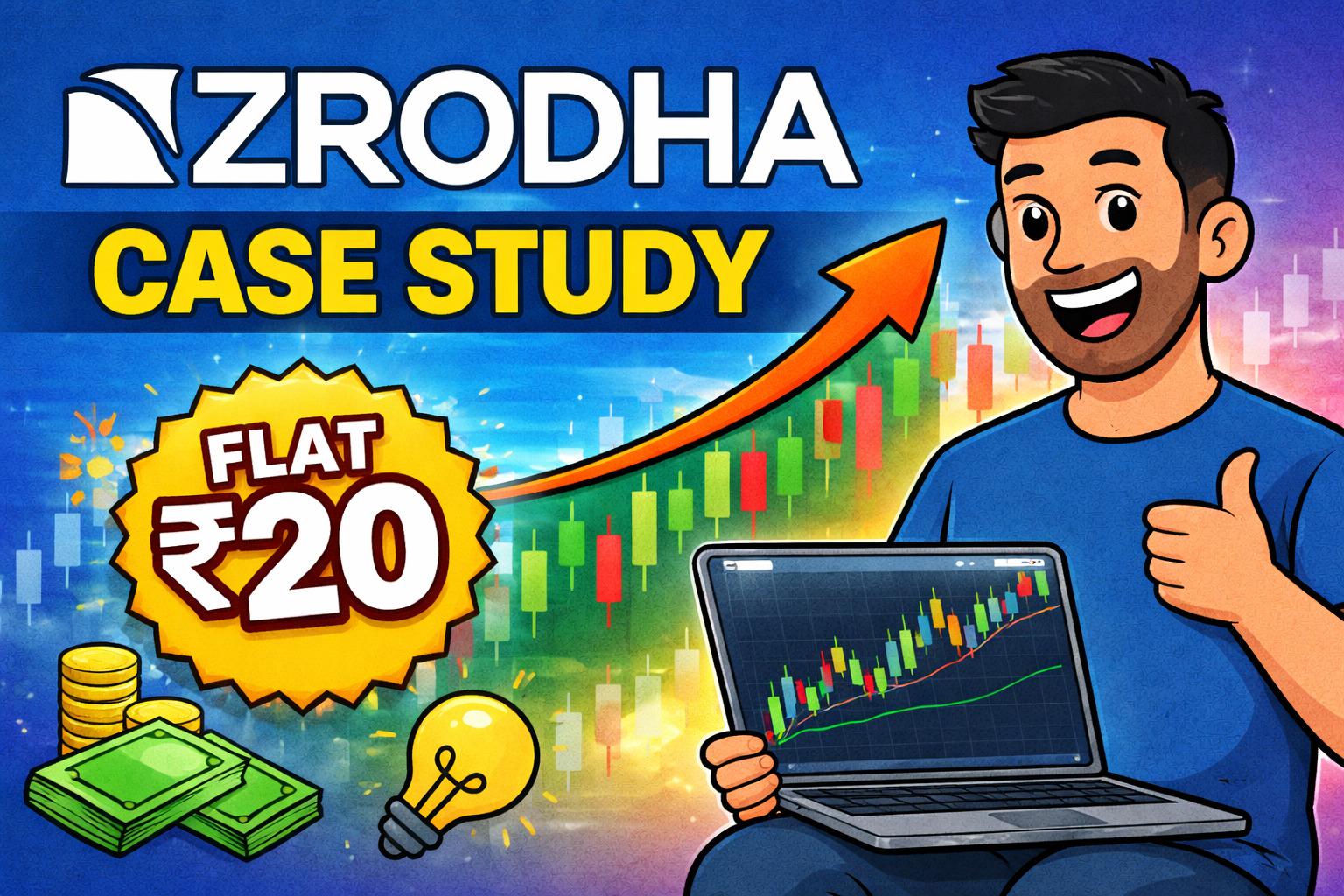
• Flat ₹20 per trade
• Zero brokerage on delivery trades
This was revolutionary.
Traders suddenly realized they could save thousands of rupees monthly.
This simple pricing strategy disrupted the entire industry.
------------------------------------------------------------
BOOTSTRAPPED – NO VC FUNDING
One of the most unique aspects of Zerodha:
It is bootstrapped.
Unlike many startups that raise funding and burn cash on marketing, Zerodha:
• Took no external venture capital
• Focused on profitability
• Scaled organically
This gave them:
• Full control over decisions
• No investor pressure
• Long-term sustainability
Today, Zerodha is one of India’s largest profitable startups without VC funding.
------------------------------------------------------------
TECHNOLOGY-FIRST APPROACH
Zerodha invested heavily in technology.
They launched their trading platform called:
KITE
Features included:
• Clean and simple interface
• Fast order execution
• Mobile-first experience
• Real-time data
Traditional brokers were using outdated systems, but Zerodha focused on user experience.
Technology became their competitive advantage.
------------------------------------------------------------
EDUCATION AS A GROWTH STRATEGY – ZERODHA VARSITY
Zerodha did something very smart.
They launched:
Zerodha Varsity – a free educational platform for stock market learning.
This built:
• Trust
• Authority
• Brand loyalty
Instead of selling aggressively, they educated users.
This content-driven approach helped them grow organically.
------------------------------------------------------------
GROWTH & NUMBERS
By 2026:
• Over 1 crore active users
• Largest retail stockbroker in India
• Profitable for multiple consecutive years
• No external funding
• Unicorn valuation
Their growth came from:
• Word-of-mouth marketing
• Strong product experience
• Transparent pricing
------------------------------------------------------------
CHALLENGES FACED BY ZERODHA
The journey was not easy.
1. Regulatory Challenges
Stock markets are heavily regulated. Compliance and rules were strict.
2. Technical Glitches
During high trading volume days, the platform faced outages.
3. Rising Competition
New players like:
• Groww
• Upstox
• Angel One
entered with aggressive marketing campaigns.
Zerodha’s response:
• Improve product
• Focus on stability
• Avoid marketing wars
They chose long-term sustainability over short-term hype.
------------------------------------------------------------
ZERODHA’S ECOSYSTEM EXPANSION
Zerodha expanded beyond brokerage.
They launched:
• Coin – Direct mutual fund platform
• Rainmatter – Fintech investment initiative
• Sensibull – Options trading tool (partnered)
• Smallcase integrations
Instead of staying limited, they built an ecosystem.
This strengthened their brand positioning in fintech.
------------------------------------------------------------
WHAT MADE ZERODHA SUCCESSFUL?
1. Simple Pricing
Flat ₹20 model was easy to understand.
2. Transparency
No hidden charges built trust.
3. Technology Focus
User-friendly platform increased retention.
4. Education-Based Marketing
Varsity built authority.
5. Bootstrapped Discipline
Sustainable growth strategy.
6. Customer-Centric Philosophy
They solved real problems, not vanity metrics.
------------------------------------------------------------
IMPACT ON INDIA’S ECONOMY
Zerodha contributed to:
• Increased retail participation in stock markets
• Financial literacy growth
• Democratization of investing
• Youth participation in trading
The startup played a major role in shaping India’s fintech ecosystem.
------------------------------------------------------------
LESSONS FOR ENTREPRENEURS
If you are building a startup, learn this from Zerodha:
1. Solve a real problem.
2. Keep pricing simple.
3. Focus on product over marketing.
4. Build trust before scaling.
5. Profitability matters.
6. Bootstrapping can be powerful.
Zerodha proves that Indian startups can become unicorns without burning investor money.
------------------------------------------------------------
FUTURE OF ZERODHA (2026 & BEYOND)
Expected focus areas:
• AI-powered trading insights
• Advanced risk management tools
• Deeper financial education
• Continued ecosystem expansion
Zerodha is no longer just a brokerage company.
It is a fintech ecosystem.
------------------------------------------------------------
FINAL THOUGHTS
Zerodha’s journey is not just about stock trading.
It is about:
• Simplicity
• Discipline
• Innovation
• Long-term thinking
In a world where startups chase funding and valuation, Zerodha built a profitable, sustainable, and trusted brand.
For founders and young entrepreneurs, this case study is a masterclass in building a startup the right way.

Leave a comment
Your email address will not be published. Required fields are marked *