
In today’s fast-changing SEO world, everyone’s chasing one thing — Google rankings. 📈
But while many marketers obsess over keywords, backlinks, and tools, Google’s algorithm quietly focuses on something deeper… something human — helpful content. ❤️
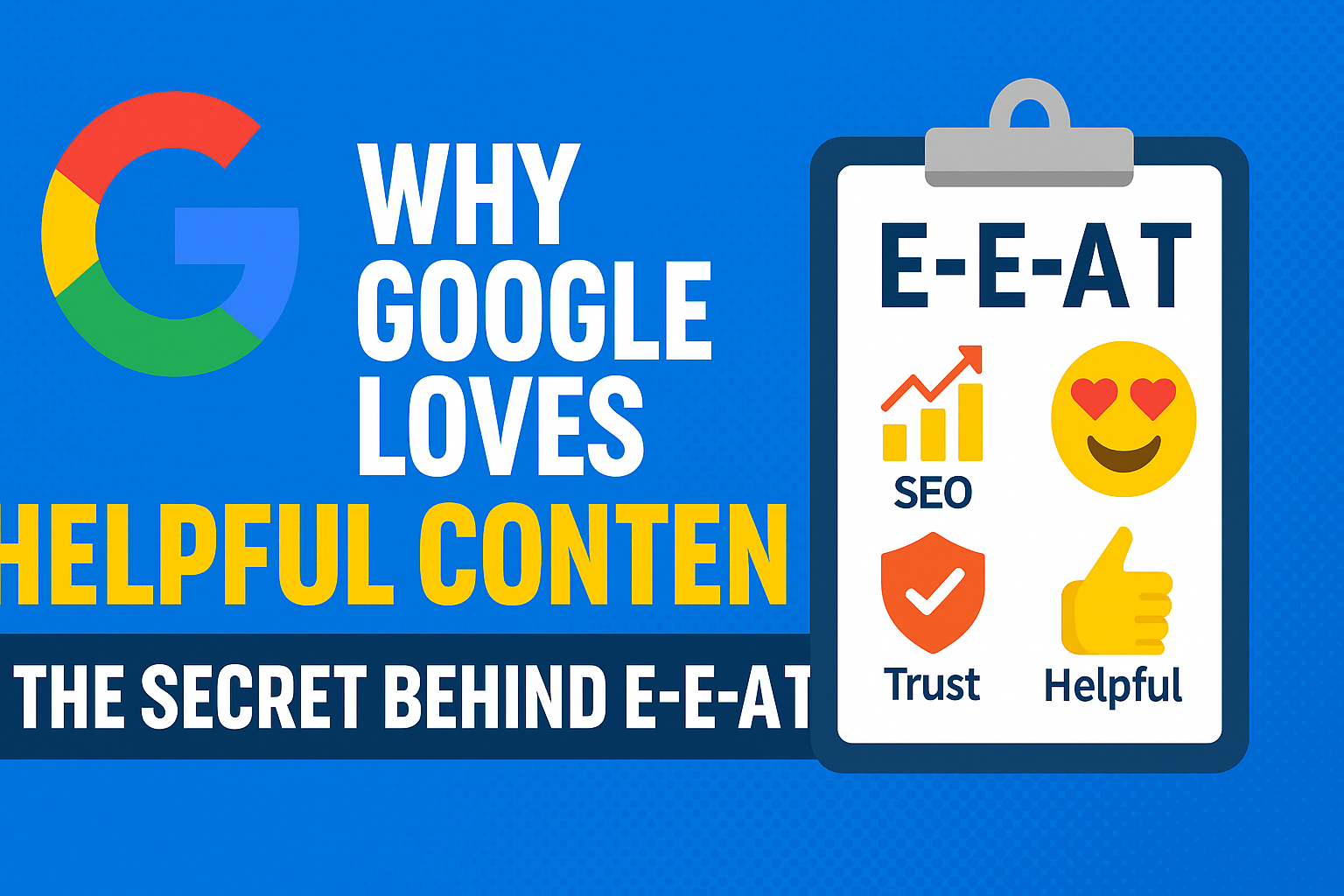
And the backbone of that “helpful” philosophy is Google’s E-E-A-T framework — Experience, Expertise, Authoritativeness, and Trustworthiness.
If you’re wondering why some blogs effortlessly rank while others sink despite “perfect SEO,” this guide will unlock the real reason behind it.
Welcome to the world of Google’s Helpful Content + E-E-A-T Secrets, explained simply and powerfully for 2026 and beyond 🔥
🌍 What Does "Helpful Content" Really Mean?
Google rolled out the Helpful Content Update to prioritize pages that truly help users, not just rank for search engines.
In short — Google wants content that:
✅ Solves problems.
✅ Is written by humans (or feels like it).
✅ Provides real value from experience.
✅ Leaves readers satisfied — not confused.
Here’s Google’s official philosophy simplified:
“Write for people, not for algorithms.”
Sounds easy, right? Yet 90% of websites still miss the mark. Let’s see why 👇
🤖 The Problem With Old SEO: Keyword-Stuffed, Empty Content
A few years ago, you could easily rank with:
Keyword stuffing 🧱
Generic blog posts
AI-written spam content
Clickbait headlines
But not anymore.
In 2026, Google’s AI-based systems (like RankBrain and BERT) analyze user intent, content quality, and experience signals.
If a user clicks your article and leaves in 5 seconds — that’s a bad signal. 🚫
If your post gets shared, bookmarked, and re-read — that’s a great signal. ✅
So helpful content = the kind that users love enough to stay, engage, and share.
🧠 What is Google E-E-A-T (Experience, Expertise, Authoritativeness, Trustworthiness)?
E-E-A-T isn’t just a fancy SEO acronym — it’s Google’s entire way of evaluating your site’s credibility.
Originally, Google used E-A-T, but in late 2022, it added another “E” for Experience — because real-world experience now matters as much as expertise.
Let’s break it down 👇
🧍♂️ 1. Experience (The New “E”)
Google wants content written by people who have first-hand experience with the topic.
Example:
A blogger who personally used a fitness supplement.
A traveler who actually visited Bali.
A marketer who tested multiple email tools.
If your article shows real experience (photos, screenshots, results, or personal insights), Google recognizes it as authentic.
💡 Pro Tip: Add phrases like “I tried…,” “My results after using…,” or “In my experience…” — they build both trust and EEAT power.
🧑🏫 2. Expertise
Expertise means the author knows their subject deeply.
Example:
A nutritionist writing about diet plans.
A cybersecurity expert explaining data privacy.
A pro affiliate marketer sharing conversion tips.
If you’re not a certified expert — don’t worry! You can still demonstrate expertise by showing depth, research, and actionable advice.
💡 Pro Tip:
Cite trustworthy sources (like Google Research, HubSpot, or Ahrefs). Use data, stats, and real examples. That signals expertise.
🧱 3. Authoritativeness
Authority = how well-recognized and respected your content or brand is in the industry.
Google looks for signals like:
Mentions or backlinks from other authoritative sites.
Media coverage.
Guest posts on reputable platforms.
Active audience engagement (comments, shares, social presence).
💡 Pro Tip:
Build authority by collaborating with influencers, publishing guest blogs, and getting cited by other experts.
Your site becomes the “go-to” resource in your niche.
🔒 4. Trustworthiness
Trust is the foundation of all rankings.
Google looks at:
Whether your website is safe (HTTPS).
If your content is factually accurate.
If you have a clear “About,” “Contact,” and “Privacy Policy” page.
Verified author profiles and credentials.
💡 Pro Tip:
Add real names, author bios, and credentials to your posts. Google loves transparency.
📊 How E-E-A-T Impacts Rankings
E-E-A-T isn’t a single ranking factor. It’s more like a trust score Google builds about your entire website and content.
When two websites target the same keyword, the one with higher E-E-A-T almost always outranks the other.
Let’s visualize it 👇
| Factor | Low E-E-A-T Site | High E-E-A-T Site |
|---|---|---|
| Content quality | Generic, keyword-stuffed | Helpful, detailed, original |
| Author identity | Anonymous | Verified expert |
| Sources | None or spammy | Credible citations |
| User engagement | Low | High |
| Trust signals | Missing | HTTPS, contact, social proof |
Result: High E-E-A-T sites dominate the top 3 positions consistently.
🔍 The Secret Behind Google’s Love for Helpful Content
Here’s the truth most people ignore 👇
Google doesn’t rank your website — users do.
If users find your content helpful, stay longer, and share it — Google rewards you automatically.
So when Google says “helpful content,” it really means “content that earns user trust and satisfaction.”
The E-E-A-T framework helps Google identify which pages deserve that trust.
In short:
Helpful content + E-E-A-T = Long-term SEO dominance 🏆
⚙️ How to Create Helpful Content That Google Loves (2026 Strategy)
Here’s a step-by-step blueprint to build content that Google’s algorithm AND readers adore 💙
🧩 Step 1: Understand the Search Intent
Before writing, ask yourself:
“What is the user truly looking for?”
There are 4 main search intents:
Informational: “How to start affiliate marketing?”
Navigational: “Floksy Digital login”
Transactional: “Buy web hosting with free domain”
Commercial: “Best SEO tools 2026 review”
🎯 Match your content to the intent — not just keywords.
✍️ Step 2: Write with Real Experience
Google can now detect AI-like, robotic writing.
So always:
Share personal experiences.
Use conversational tone (like talking to a friend 👋).
Add visuals — screenshots, videos, and real examples.
💬 Example:
“When I used SEMrush to track my keywords, my organic traffic grew by 32% in just one month!”
That’s experience — and Google values it highly.
📚 Step 3: Add Data and Sources
Back up your claims with numbers and authority.
✅ “According to Ahrefs, 90.63% of web pages get zero Google traffic.”
✅ “A HubSpot study shows blogs with 2,000+ words rank better.”
This builds both Expertise and Trust.
🧑💻 Step 4: Optimize for UX (User Experience)
Google tracks engagement metrics like:
Time on page ⏱️
Bounce rate 🚪
Scroll depth 📜
If users enjoy reading, Google assumes your content is helpful.
So:
Use short paragraphs.
Add emojis and visuals.
Include bullet points, quotes, and infographics.
Make sure it looks beautiful on mobile.
🧠 Step 5: Showcase Author Authority
Every post should include:
Author name 🧍♂️
Profile photo
Short bio
Relevant credentials or experience
Example:
“Written by Rahul Sharma — Digital Marketing Expert with 6+ years in SEO and affiliate marketing.”
This boosts trust and E-E-A-T dramatically.
🛡️ Step 6: Build Site Trust
Make sure your site has:
✅ SSL certificate (HTTPS)
✅ About & Contact page
✅ Privacy Policy & Terms
✅ Fast loading speed
✅ No intrusive ads or popups
Trust = higher rankings.
🔗 Step 7: Build Backlinks (Authority Boosters)
Backlinks are still the backbone of authority.
But not all backlinks are equal.
You want:
Contextual backlinks from niche-relevant sites.
Guest posts from respected blogs.
Mentions on media sites or directories.
💡 Internal Tip:
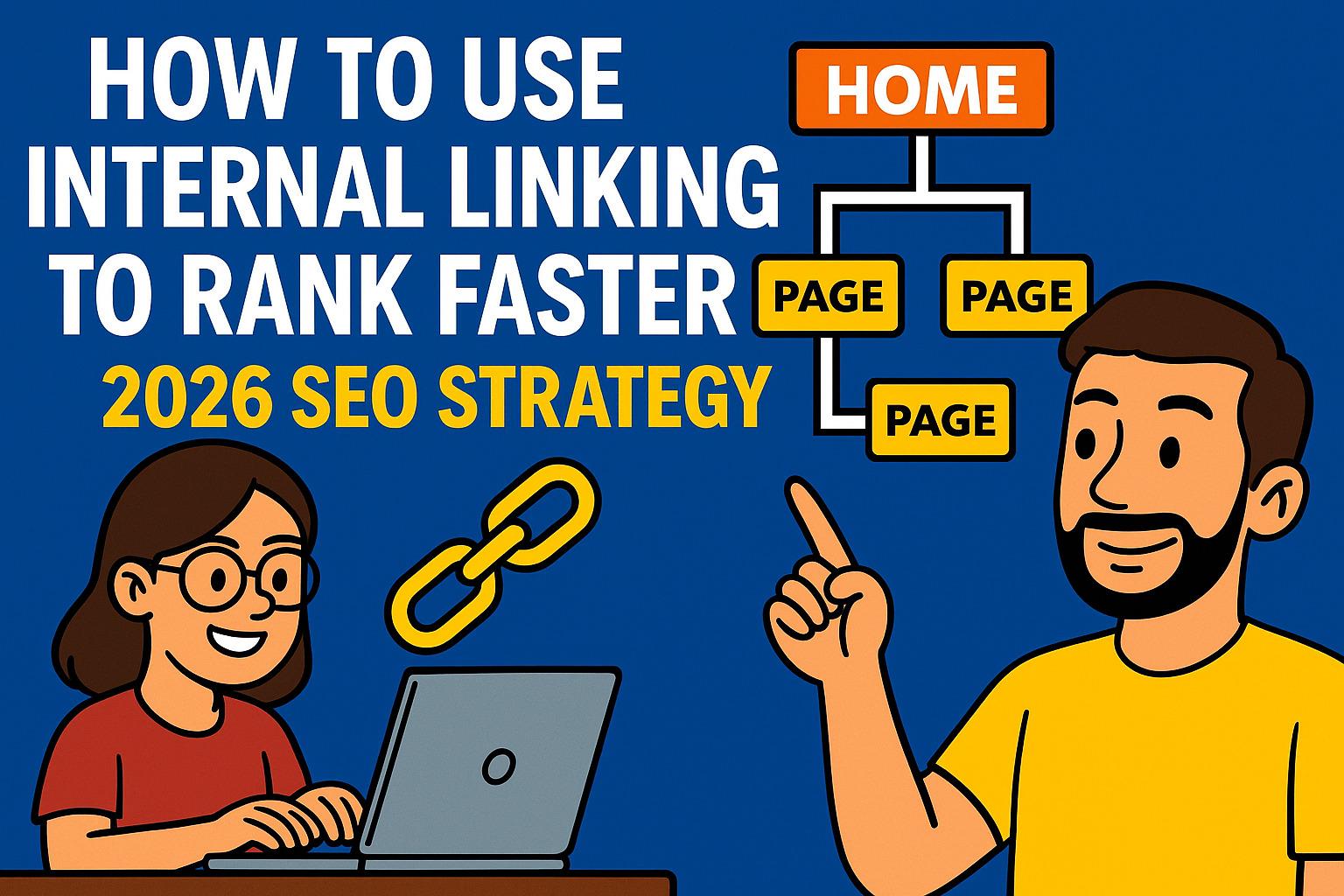
Interlink your own posts (like linking this article to “Best Free Traffic Sources for Affiliate Marketers in 2026”) to improve SEO flow.
🧭 Real Example of E-E-A-T in Action
Let’s say two websites post the same topic:
“How to Start Affiliate Marketing in 2026”
Website A:
800-word generic post.
No author, no images.
Written by AI.
Website B:
2000+ words.
Written by an actual marketer sharing real experiences.
Includes screenshots, case studies, and outbound citations.
Who wins?
👉 Website B, every single time.
Because it aligns with Experience, Expertise, Authority, and Trust.
⚡ The Rise of AI and Google’s Response
With AI content booming in 2026, Google isn’t banning AI — it’s rewarding AI + human expertise.
If your AI-generated article still offers unique experiences, valuable insights, and accurate data — it’s fine.
But pure AI spam = instant penalty 🚫
So the winning formula is:
AI for speed + Human for depth + E-E-A-T for trust
📈 How to Audit Your E-E-A-T (Checklist)
Here’s a quick checklist to improve your site’s E-E-A-T score 👇
| Element | Question | Goal |
|---|---|---|
| Experience | Have you used the product or service you’re writing about? | Add real examples/screenshots |
| Expertise | Does your content show research or credentials? | Back it up with facts and links |
| Authority | Are other sites referencing or linking to you? | Build quality backlinks |
| Trust | Is your site transparent and secure? | Use HTTPS, add author pages |
| Content | Does it answer user questions in detail? | Update and expand regularly |
✅ Perform this audit quarterly for best results.
🔥 Future of E-E-A-T: The Human-First SEO Era
In 2026 and beyond, the future of SEO is H2H — Human to Human.
Google’s updates are not punishing marketers; they’re rewarding real creators who bring experience, empathy, and education to their readers.
So don’t chase the algorithm — earn the algorithm’s trust.
The more value you bring to humans, the higher you’ll rank.
As Google’s John Mueller once said:
“If you make content for people, search engines will love it.” ❤️
💬 Final Thoughts
Google’s Helpful Content and E-E-A-T framework are not just SEO buzzwords — they’re a reflection of the internet’s future.
We’re moving from keyword optimization → to trust optimization.
To win in this new era:
Be authentic.
Share your experience.
Prove your expertise.
Build real trust.
And remember:
SEO isn’t about gaming Google — it’s about helping users so well that Google can’t ignore you. 💪
🔗 Internal Linking Suggestions
[Best Free Traffic Sources for Affiliate Marketers in 2026]
[Smartlink vs Deeplink: What’s Better for Conversions in Affiliate Marketing]
[Top AI SEO Tools Every Marketer Should Use in 2026]
[Affiliate Blogging Tips to Rank Fast in 2026]

Leave a comment
Your email address will not be published. Required fields are marked *